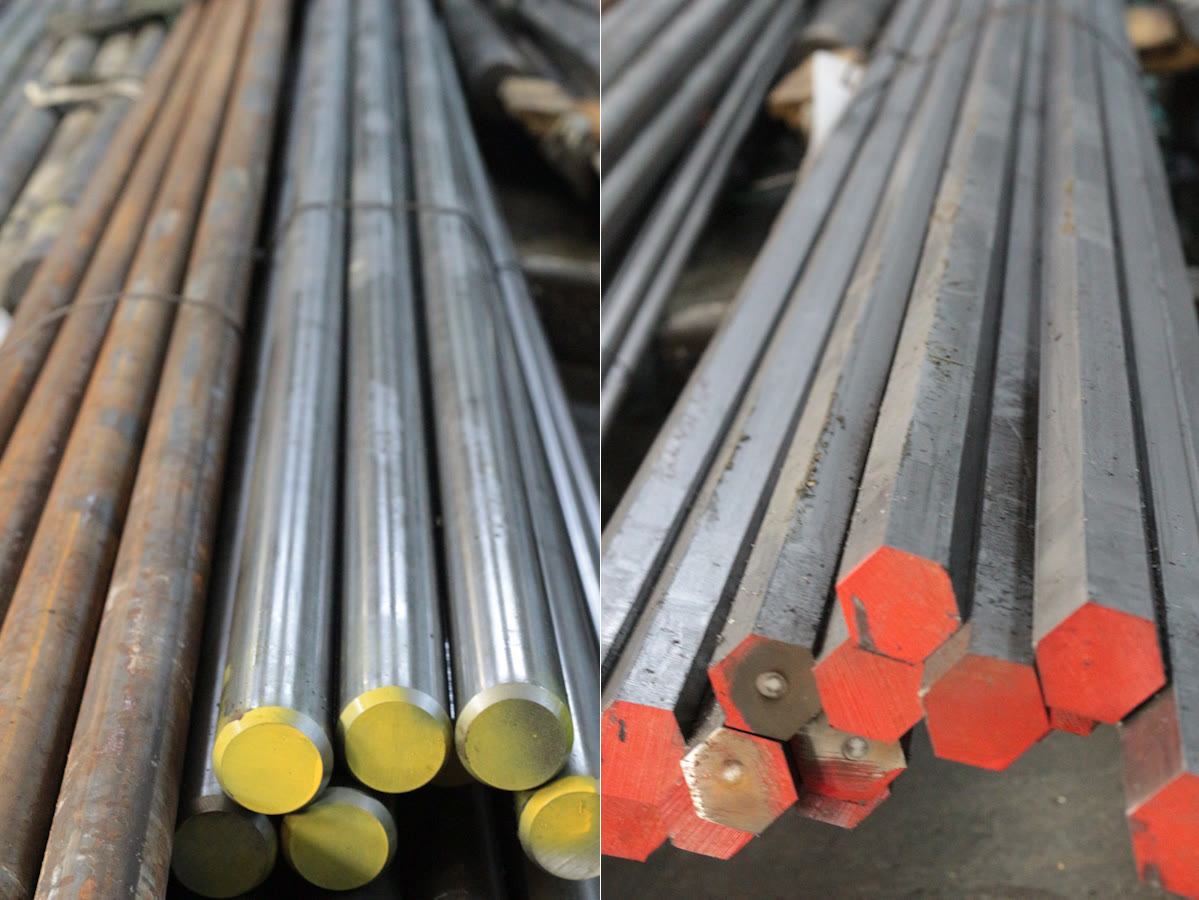
What does machinability affect?
Machinability is not simply cutting speed. Chip control, tool life, burr formation, surface quality and dimensional stability all affect production. The same material designation in a different hardness or supply condition can require a different machining plan.
Start with service loads, temperature, corrosion exposure and wear requirements. Then compare stock availability, machining and finishing sequence, and total component cost. This guide does not replace design approval.
Carbon and alloy steels
For shafts, pins, fasteners and machine parts, steel selection depends on strength, hardenability and the final surface requirement. Grades such as C45 and 42CrMo4 are not automatic substitutes. Specify the material standard, supply condition and required final hardness on the drawing.
Critical bearing diameters may need grinding or another finishing step after heat treatment. Agree machining allowances and inspection stages during quotation; one cutting speed or hardness value cannot represent all steels.
Stainless steels
Stainless steel is not a single machinability class. Austenitic, ferritic, martensitic and duplex grades behave differently. In some grades, work hardening and chip control are particularly important to tool and operation selection.
For valve components, fluid connections and corrosion-exposed parts, the designer should select the grade for the fluid and operating environment. Share welding, passivation and surface roughness requirements at the outset.
Aluminium and copper alloys
Aluminium can suit lightweight housings, plates and fixture parts. Alloy and temper affect chip formation and dimensional behaviour. Thin walls need a considered clamping and material-removal sequence; where anodising is required, review alloy choice and post-coating dimensions together.
Copper and brass do not machine identically. Pure copper's ductility can make burr and surface control demanding, while alloyed options behave differently. For contacts, connections and heat-transfer parts, specify conductivity, composition restrictions and end-use requirements.
Titanium, cast iron and engineering plastics
Titanium components need a separate review of tooling, heat management and rigidity. An alloy being used in aerospace or medical applications does not automatically qualify or certify a manufactured part for those sectors.
In cast iron, graphite form, matrix and casting skin affect machinability; it is misleading to classify every cast iron as difficult to machine. Housings and bearing supports require attention to casting quality, machining allowance and datum surfaces.
For plastics such as POM, PA and PTFE, consider thermal expansion, moisture effects and clamping deformation. Bushings, guides and insulating parts need appropriate measurement conditions and service specifications. There is no universal rule that all plastics require low cutting speeds.
What should your RFQ include?
Send CNC-Turkey your drawing and quantities for new component manufacturing. Material alternatives are considered only after technical review and customer approval. Availability, process and inspection requirements are confirmed for the individual part.
- ✓Material standard, grade and supply condition
- ✓Critical tolerances, surface roughness and final hardness
- ✓Heat treatment, coating and certificate requirements
- ✓Order quantity, repeat demand and delivery country