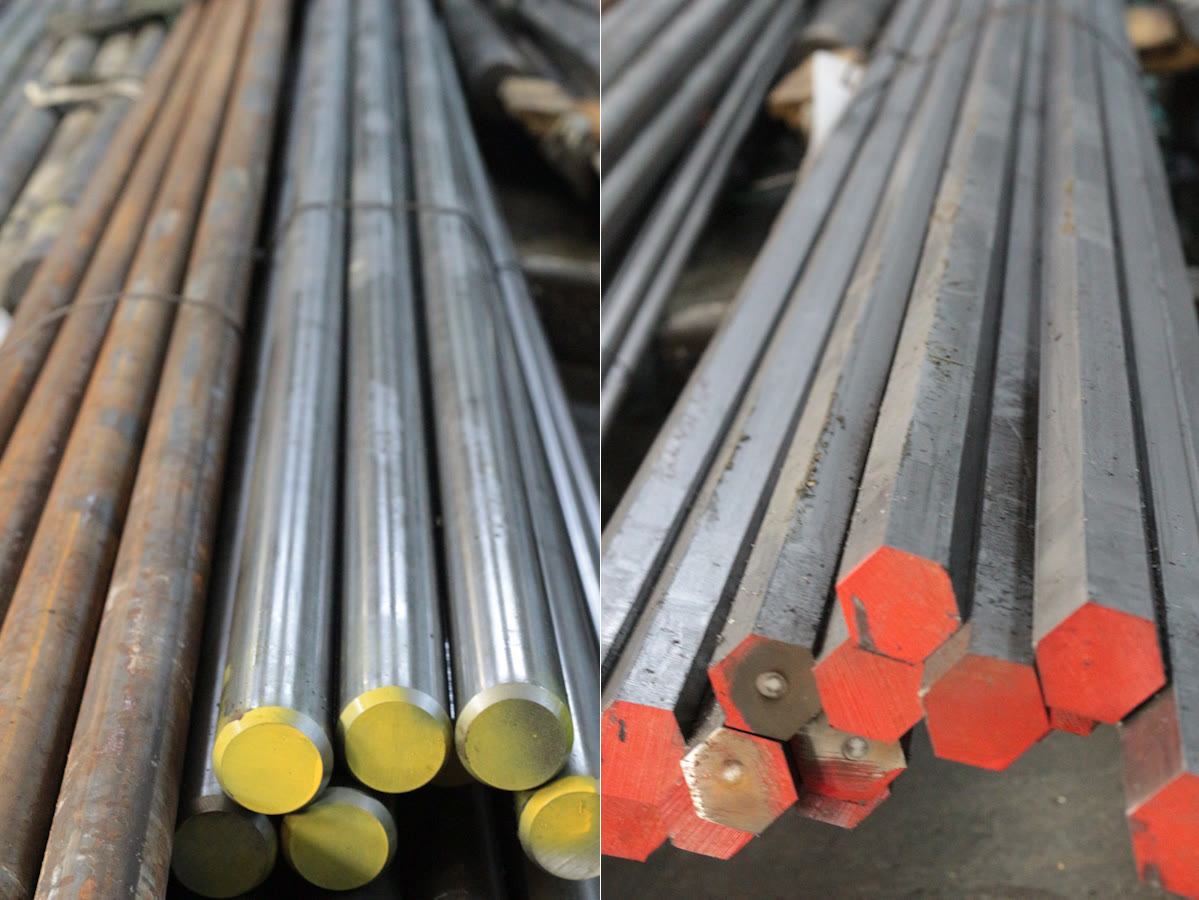
The unit cost of a CNC machined part is built from five main elements: raw material cost, machine time, setup and fixturing cost, secondary processes (heat treatment, coating) and quality/documentation cost.
Design changes require written approval from the customer or design authority. Cost impact is assessed against the alternative drawing and production plan; no fixed saving is promised.
Raw Material Cost
Material cost depends on grade, supply condition, blank size, purchased quantity and the current quotation. Machining allowance, cutting loss and required material documents also matter.
Compare 304/316L, 42CrMo4 or aluminium under the same part requirements. Material condition, machinability and tool life affect total cost; substitution requires design approval.
Machine Time and Machining Cycle
We do not apply one universal hourly rate or a fixed country discount for CNC machining in Turkey. Machine selection, setup, cycle time, tooling and inspection are assessed together. Compare quotations using the same drawing, quantity and delivery requirements.
Design tip: Geometries that can be machined in a single setup (e.g. pure turning rather than turn-mill combinations) reduce setup count and lower unit cost.
The Impact of Batch Size
Setup and programming costs are allocated across accepted parts. Request separate prices for alternative quantities; the unit-price effect depends on material purchasing, cycle time, tooling and inspection. No fixed saving percentage applies.
Starting with prototype quantities makes sense when the design is not yet validated. Moving to series production after design approval rapidly reduces unit cost.
Surface Finishing and Secondary Processes
Anodising, nickel/chrome plating, painting and polishing are reviewed against the drawing. Surface area, specification, masking, batch quantity and final inspection affect cost and lead time. Process scope is confirmed in the quotation.
Heat treatment (hardening, tempering) similarly adds cost and lead time. If heat treatment is required by the design specification, this should be stated clearly at the quotation stage.
Practical Tips to Reduce CNC Machining Cost
✓Avoid unnecessarily tight tolerances — specify them only on functionally critical surfaces
✓Design close to standard raw material sizes (matching stock bar or plate dimensions)
✓Enable single-setup machining where possible
✓Keep surface roughness requirements realistic (Ra 3.2 is far cheaper than Ra 0.8 in most cases)
✓Consolidate larger batches and consider periodic ordering over frequent small orders
FAQ
Frequently asked questions
What is the CNC machining hourly rate in Turkey?
We do not publish one standard hourly rate. A component-specific quotation follows review of machine type, setup and machining time, material, quantity and quality requirements. An hourly rate alone is not the total part price.
Does tighter tolerance always increase cost?
Not always or by a fixed amount. The impact depends on size, material condition, geometry, process and measurement method. Additional finishing or inspection is determined by technical review; no universal accuracy limit is promised.
Is there a free online CNC cost calculator?
Yes. CNC Turkey offers a free CNC part price calculator based on real production data at cnc-turkey.com/cnc-machining-cost-calculator
RFQ
Send your drawing for a manufacturing review
Start with quantity, material, quality requirements and delivery country.